YOU视频-在线影院 YOU视频-在线影院
收藏
6.0
网友评分
  • 很差
  • 较差
  • 还行
  • 推荐
  • 力荐
6.7 702次评分
  • 很差
  • 较差
  • 还行
  • 推荐
  • 力荐
扫描观看

扫描一扫app播放

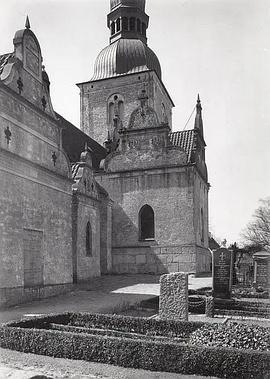
The history of Danish country church architecture is told by showing scenes of how the church was used by the congregation, beginning with the celebration of mass in a small and simple wooden church 800 years ago, and ending with the congregation singing in a village church of to-day. The development and the growth of the pattern of church architecture is shown.  Dreyer in this film shows a series of churches from different periods with churchgoers in period clothing. Each period is separated by a shot of a church bell double-exposed on the sky. Although the film has a vibrant and instructive way of communicating the different epochs and styles to students, it does not exhibit the artistic quality that usually distinguishes a Dreyer film, except perhaps in some of the costumes, which were originally made for Day of Wrath.  The board of Dansk Kulturfilm in autumn 1945 decided that their planned church film would exclusively be about village churches. Dreyer would rework the script that was written by editor and folk high-school principal Bernhard Jensen, aided by a committee of experts consisting of architect H. Lønborg-Jensen and Victor Hermansen, curator at the National Museum of Denmark. Dreyer had a first draft ready in mid-March, entitled Kirken er et gammelt Hus (The Church Is an Old House), which was distributed to the members of the committee for their comments.  In the last half of July, Dreyer and Victor Hermansen travelled the country to look at suitable churches. They researched the details and at Dreyer’s request a number of technical changes were made to the churches, including the removal of porcelain holders for electrical wiring in Tveje Merløse Church.  On 4 July, Dreyer went in advance to Ringkøbing. Shooting was set to start a few days later with the arrival of the director of photography, Preben Frank, who had fallen off a ladder and broken his leg, Fortunately, he was ready to cautiously start working again within a few days, with his leg in a cast.  Otherwise, the production went without a glitch. Everywhere, Dreyer said, they were well received at the vicarages and they had no problem getting enough extras. On 1 august, they returned to Copenhagen with almost all their footage in the can. They only needed to film the church in Skelby, where the weather had been against them, plus a Swedish wooden church in Hedared. The economy was distressed so soon after the war, especially when it came to foreign currency, but there were no real wooden churches left in Denmark and building an interior set in the studio would be too expensive.  The finished film was shown for the first time on 24 September 1947 to a small, closed circle, which included the Minister for Ecclesiastical Affairs. In December 1947, as was Dansk Kulturfilm’s standard practice, the film was presented to the press, politicians and others on a programme with four other short films.
展开

展示你的位置
展示你的位置

资源列表

相关明星

相关影片

暴劫青春我们无法阻挡2
井浦新,东出昌大,芋生悠,杉田雷麟,コムアイ,有森也实,田中要次,田口智朗,门胁麦,田中丽奈,竹中直人
黑岩喋血记
斯宾塞·屈塞,罗伯特·瑞安,安妮·弗朗西丝,迪恩·贾格尔,沃尔特·布伦南,约翰·埃里克森,欧内斯特·博格宁,李·马文,罗素柯林斯,沃尔特·桑德
马卡里奧
伊格纳西奥·洛佩斯·塔尔索,皮纳·佩利塞尔,恩里克·卢塞罗,Mario,Alberto,Rodríguez
关山飞渡
驿马车 驿站马车
萨德侯爵夫人
斯蒂娜·艾克布罗德,安尼塔·布耶尔克,玛丽·理查德森,玛加丽塔·比斯特伦,阿格妮塔·埃克曼尔,Helena,Brodin
给鲍比·朗的情歌
给鲍比朗的情歌 献给你的情歌
访谈杀手
埃里克·阿拉贡 艾米·班德 盖尔·拜尔
局外人2016
巴黎交易员(台),Team Spirit
看不见的朋友
Hello Ghost/开心家族 台湾版,我的麻吉4個鬼
芭比杀手
玛卡蕾娜·戈麦斯,阿雷胡·苏拉斯,塞萨尔·卡米诺,ángel de Andrés López,胡安·卡洛斯·凡希多,Nadia Casado,胡安?迪亚兹,David Tenreiro,费南多·拉马洛,拉蒙·兰加,Jimmy Barnatán,Eloi Yebra,帕科·莱昂,Luciano Federico,Andreu Castro
  • 片名:丹麦小村教堂
  • 状态:HD中字
  • 主演:Ib Koch-Olsen 
  • 导演:卡尔·西奥多·德莱叶 
  • 年份:1947
  • 地区:其它
  • 类型:短片 剧情 
  • 频道:内详
  • 上映:1947-12-15
  • 语言:其它
  • 更新:2026-02-19 19:15
  • 简介:The history of Danish country church architecture is told by showing scenes of how the church was used by the congregation, beginning with the celebration of mass in a small and simple wooden church 800 years ago, and ending with the congregation singing in a village church of to-day. The development and the growth of the pattern of church architecture is shown.  Dreyer in this film shows a series of churches from different periods with churchgoers in period clothing. Each period is separated by a shot of a church bell double-exposed on the sky. Although the film has a vibrant and instructive way of communicating the different epochs and styles to students, it does not exhibit the artistic quality that usually distinguishes a Dreyer film, except perhaps in some of the costumes, which were originally made for Day of Wrath.  The board of Dansk Kulturfilm in autumn 1945 decided that their planned church film would exclusively be about village churches. Dreyer would rework the script that was written by editor and folk high-school principal Bernhard Jensen, aided by a committee of experts consisting of architect H. Lønborg-Jensen and Victor Hermansen, curator at the National Museum of Denmark. Dreyer had a first draft ready in mid-March, entitled Kirken er et gammelt Hus (The Church Is an Old House), which was distributed to the members of the committee for their comments.  In the last half of July, Dreyer and Victor Hermansen travelled the country to look at suitable churches. They researched the details and at Dreyer’s request a number of technical changes were made to the churches, including the removal of porcelain holders for electrical wiring in Tveje Merløse Church.  On 4 July, Dreyer went in advance to Ringkøbing. Shooting was set to start a few days later with the arrival of the director of photography, Preben Frank, who had fallen off a ladder and broken his leg, Fortunately, he was ready to cautiously start working again within a few days, with his leg in a cast.  Otherwise, the production went without a glitch. Everywhere, Dreyer said, they were well received at the vicarages and they had no problem getting enough extras. On 1 august, they returned to Copenhagen with almost all their footage in the can. They only needed to film the church in Skelby, where the weather had been against them, plus a Swedish wooden church in Hedared. The economy was distressed so soon after the war, especially when it came to foreign currency, but there were no real wooden churches left in Denmark and building an interior set in the studio would be too expensive.  The finished film was shown for the first time on 24 September 1947 to a small, closed circle, which included the Minister for Ecclesiastical Affairs. In December 1947, as was Dansk Kulturfilm’s standard practice, the film was presented to the press, politicians and others on a programme with four other short films.
公告

YOU视频-在线影院,本站全蓝光画质永久免费观看,如果资源无法播放请切换线路或等待管理修复,优先修复热播影视。

保存收藏急速观影

《youvod.tv》

搜索历史
删除
热门搜索
本地记录